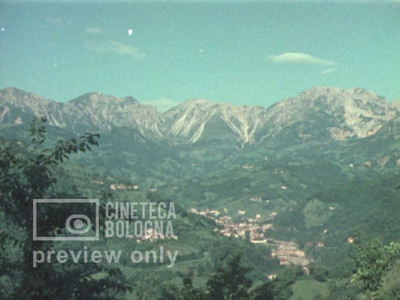
Recoaro sorge ai piedi delle Piccole Dolomiti, in una valle detta “conca di smeraldo” per il verde delle selve e dei pascoli che la circondano. Il paese, famoso per le sue acque, è sede di ...
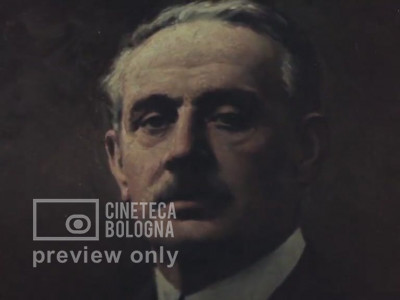
Ricostruzione della vita e delle opere di Giacomo Puccini, a partire da Lucca, la sua città natale, e dai primi anni milanesi: mentre scorrono immagini del Duomo e della Galleria Vittorio Emanu...
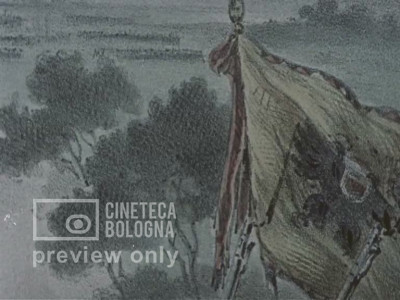
La storia nel decennio 1849-1859 raccontata attraverso illustrazioni d'epoca e riprese sui luoghi degli avvenimenti. Una cartina mostra come nel 1849 l'Italia fosse divisa in molti stati diversi...
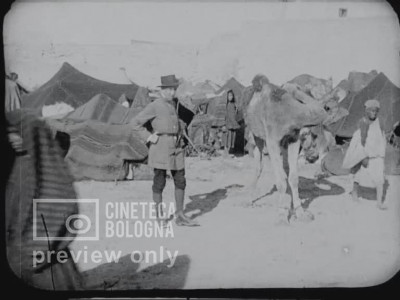
Prima guerra mondiale sul fronte della guerra italo-turca. Torpediniere turche si rifugiano nel porto di Suez per sfuggire alle navi italiane. Le navi "Puglia", "Aretusa" e "Calabria" entrano ne...
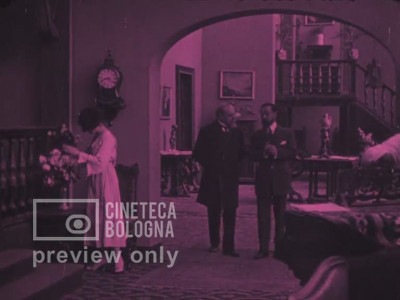
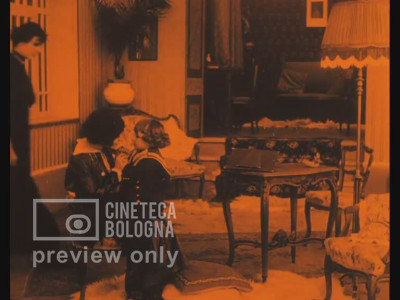
Cesarina Rupert, a modern day Messalina, is Claudio’s wife, a patriot and a brilliant inventor of war vehicles for France. Between personal drama and spy intrigues, this mismatched couple is d...
Film restored in collaboration with Centro Sperimentale di Cinematografia - Cineteca Nazionale.
Restored in collaboration with Fondazione Cineteca Italiana.
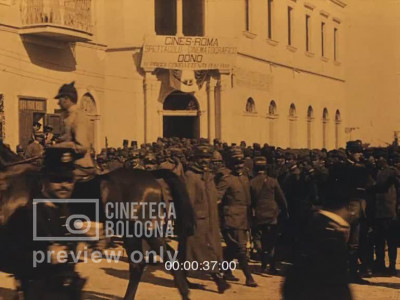
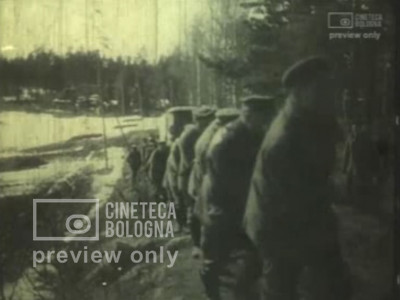
Materiale frammentario dai diversi fronti su cui si combatté la Prima Guerra Mondiale, in particolare immagini di: soldati italiani (la salita al monte Cimone, la liberazione di Gorizia, operaz...
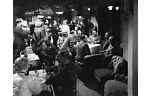
Wide shot of a café filled with Austrian officers. Some are sitting at tables and others are standing in the background, most of them hold glasses in their hands. Nurse Mathilde (actress: Adina Mandl...
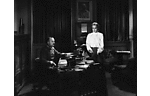
Wide shot of an office. Dr. Šrámek (actor: František Smolík) in the uniform of an Austrian officer sits at a desk and gazes at the nurse Mathilde (actress: Adina Mandlová), who is standing on the...
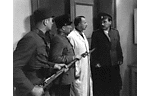
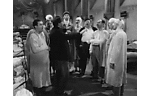
Medium shot of an Austrian soldier standing with an Austrian colonel (Jaroslav Marvan), Dr. Šrámek (František Smolík), and Lieutenant Rjepkin (Vladimír Borský). The soldier is pointing his bayon...
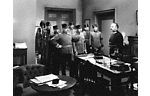
Wide shots of an office. A group of seven Austrian officers (fifth from left is actor Jaroslav Marvan) stand at the door and look at Dr. Šrámek (actor: František Smolík), who is standing behind a ...
Wide shot of a hospital room with a group of standing patients and three military privates. One of the privates, infantryman Tlamicha (actor: Theodor Pištěk), stands in the middle and conducts as th...
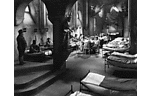
Wide shot of a church interior that has been converted into a military hospital. Wounded soldiers sit or lie on hospital beds lined up along the walls. Other patients sit at the two tables standing in...
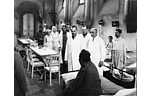
Wide shot of a hospital room where doctors are making rounds. On the left are tables with bread and carafes of water. Chairs are standing around the tables. Five doctors stand in the middle of the roo...
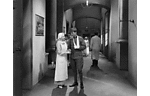
Wide shot of a hospital corridor. Nurse Tonička (actress: Truda Grosslichtová) stands in the middle of the corridor clasping hands with Corporal Bartoněk (actor: Jiří Vondrovič), whose other arm...
O. Verf.. „Krieg und Kino.“ Der Kinematograph 397 (1914): 3-4. Bericht, wie bislang der Film in Kriegen eingesetzt worden sei. Ratschläge an Kinobesitzer, wie sie sich zu verhalten hätten. Mutma...
O. Verf.. „Mars regiert die Stunde.“ Der Kinematograph 397 (1914): 5-8. Aufruf an die Kinoindustrie, sich angesichts des Krieges in die Dienste des Vaterlandes zu stellen. Vorschlag, möglichst ak...
Mit der Kamera in der Schlachtfront.“ Der Kinematograph 397 (1914): 7. Werbeanzeige, die die Bedeutung der Filmaufnahmen gerade angesichts des drohenden Krieges hervorhebt.
Aubinger, Josef: „Die Kinematographie in Kriegszeiten.“ Der Kinematograph 398 (1914): 3-5. Artikel, der die mögliche Zukunft des Kinowesens im Krieg beschreibt. Die wirtschaftliche Lage der Kinos...
O. Verf.. „Schliesst die Kinos nicht.“ Der Kinematograph 399 (1914): 3-4. Aufruf an die Kinoindustrie, die Kinos nicht zu schließen, da das Volk in Kriegszeiten Ablenkung brauche. Die Eintrittspr...
Monopolfilm-Vertriebs-GmbH..“Patriotisches Kriegs-Programm.“ Der Kinematograph 399 (1914): 5. Werbung für das aktuelle Filmprogramm der Monopolfilm GmbH.
Asta-Nielsen-Lichtspiele GmbH. „Bismarck. Die neuesten Aufnahmen aus den Kriegstagen.“ Der Kinematograph 400 (1914): 1. Werbung, mit dem Hinweis, dass der Stoff des Filmes den ernsten Kriegstagen ...
O. Verf.. „Der Mangel an Aktualitäten.“ Der Kinematograph 400 (1914): 3-4. Artikel, der den Mangel an aktuellen Aufnahmen aus dem Krieg beklagt. Der Krieg sei die richtige Gelegenheit für die Pr...