A trip to Trieste and its surroundings following the tracks of three great writers: Scipio Slataper, Italo Svevo and Umberto Saba.
L'arte e la vita del pittore Pietro Morando. Morando, ottantenne, cammina leggendo il giornale, arriva al suo studio situato nel centro della vecchia Alessandria. Nel cortile saluta un vicino, s...
From 1891 to 1945, a popular form of iconography thrived next to the official one documenting Italy’s political and social life. This alternative iconography can be found in humorous and satir...
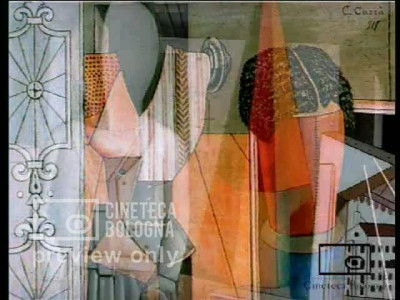
Il documentario ripercorre le tappe della produzione artistica del pittore Carlo Carrà illustrando alcune delle sue opere più note. Nato a Quargnento (Alessandria) nel 1881, Carrà nelle prime...
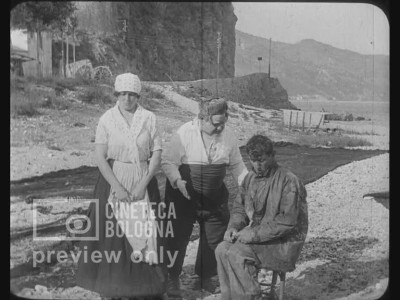
Robinet corteggia una fanciulla che sta tirando le reti a riva. Il padre della fanciulla pretende però che la figlia si metta con un pescatore, quindi Robinet si traveste e intraprende la profe...
"Difficoltà d'ogni genere si opponevano alla riproduzione cinematografica della vita degli animali marini, dovute anche alla piccolezza di questi esseri, altre alla loro straordinaria trasparen...
01 – Numero speciale. Le nostre inchieste ( Milano, 14-16/04/1969) Inaugurazione della 47° edizione della Fiera di Milano. Il presidente Saragat, con la scorta in motocicletta, giunge su una ...
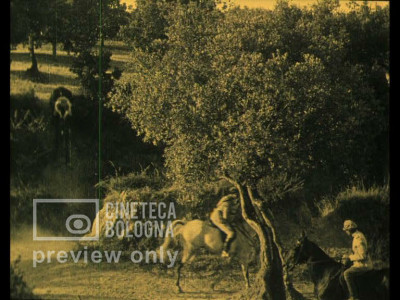
Film documenting a tortuous series of cavalry exercises. It includes a harrowing sequence of horses descending steep hills and cliffs and jumping into the water. Film restored in collaboration w...
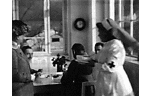
Wounded soldiers eat in a hospital room.
A military doctor shows a wounded soldier to a Red Cross delegation.
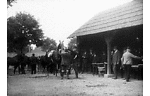
Requisition of horses.
Conscripts in the assembly camp.
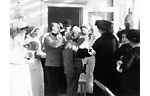
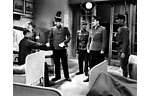
Wide shot of a hospital room. A standing First Lieutenant Schranel (actor: Vladimír Pospíšil-Born) shakes hands with First Lieutenant Liška (actor: František Kreuzmann), who is sitting on a bed w...
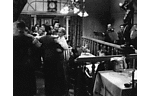
View of a dance café. Several couples are dancing on the left, including First Lieutenant Schranel (actor: Vladimír Pospíšil-Born) and Nurse Mathilde (actress: Adina Mandlová). To the right of th...
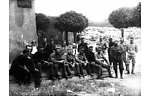
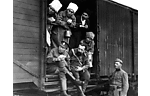
Exterior view of a train. Six Russian soldiers (prisoners of war) with Asian features are sitting or standing in the train's open door. Some of the soldiers are holding bread in their hands and all ar...
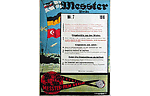
O. Verf.. „Krieg und Kino.“ Der Kinematograph 397 (1914): 3-4. Bericht, wie bislang der Film in Kriegen eingesetzt worden sei. Ratschläge an Kinobesitzer, wie sie sich zu verhalten hätten. Mutma...
O. Verf.. „Mars regiert die Stunde.“ Der Kinematograph 397 (1914): 5-8. Aufruf an die Kinoindustrie, sich angesichts des Krieges in die Dienste des Vaterlandes zu stellen. Vorschlag, möglichst ak...
Mit der Kamera in der Schlachtfront.“ Der Kinematograph 397 (1914): 7. Werbeanzeige, die die Bedeutung der Filmaufnahmen gerade angesichts des drohenden Krieges hervorhebt.
Aubinger, Josef: „Die Kinematographie in Kriegszeiten.“ Der Kinematograph 398 (1914): 3-5. Artikel, der die mögliche Zukunft des Kinowesens im Krieg beschreibt. Die wirtschaftliche Lage der Kinos...
O. Verf.. „Schliesst die Kinos nicht.“ Der Kinematograph 399 (1914): 3-4. Aufruf an die Kinoindustrie, die Kinos nicht zu schließen, da das Volk in Kriegszeiten Ablenkung brauche. Die Eintrittspr...
Monopolfilm-Vertriebs-GmbH..“Patriotisches Kriegs-Programm.“ Der Kinematograph 399 (1914): 5. Werbung für das aktuelle Filmprogramm der Monopolfilm GmbH.
Asta-Nielsen-Lichtspiele GmbH. „Bismarck. Die neuesten Aufnahmen aus den Kriegstagen.“ Der Kinematograph 400 (1914): 1. Werbung, mit dem Hinweis, dass der Stoff des Filmes den ernsten Kriegstagen ...
O. Verf.. „Der Mangel an Aktualitäten.“ Der Kinematograph 400 (1914): 3-4. Artikel, der den Mangel an aktuellen Aufnahmen aus dem Krieg beklagt. Der Krieg sei die richtige Gelegenheit für die Pr...