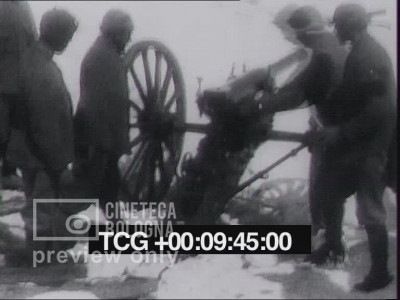
Immagini della prima guerra mondiale. Si tratta di una collazione di materiali eterogenei: italiani per la prima parte (attribuibili a Luca Comerio), e austriaci per la seconda. La prima parte m...
Prima guerra mondiale: soldati in marcia attraversano un'anonima via di un paese.
This film (originally 1,537 meters) was previously considered completely lost, until the discovery of this 345-meters fragment in the Filmoteca de Valencia. It affords a rare opportunity to obse...
Film restored in collaboration with Cinémathèque Suisse.
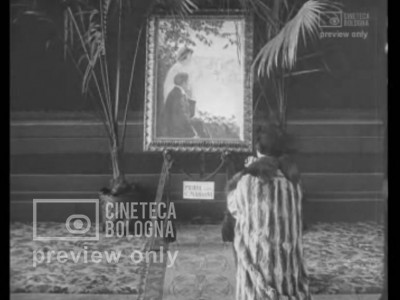
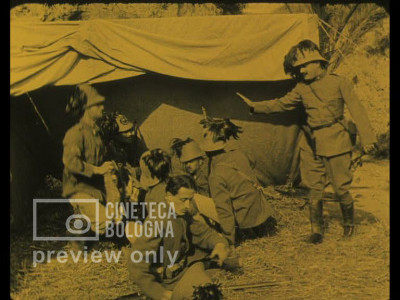
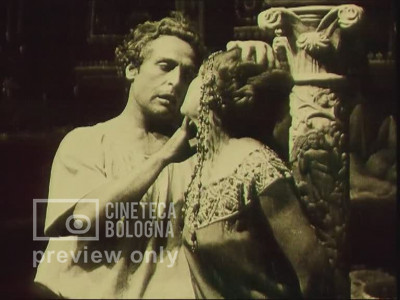
The making of patriotic films was not rare among FAI productions, and "Il bacio della gloria" is one example, together with "Armi e amori" (1913) and "Per la Patria!" (1915). “In the Speech fr...
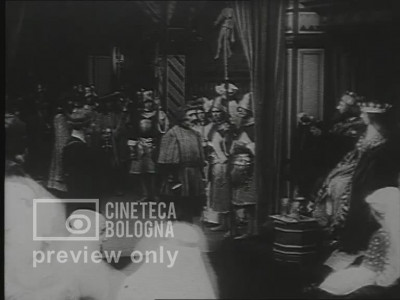
Barbarians outside: yesterday as today. Who have centuries of civilization gone by for? Not even appearance has altered the Norman in his barbarism. This great work from the Ambrosio hotbed admi...
Film restored in collaboration with Cinémathèque de Toulouse.
Film restored in collaboration with CNC - Service des Archives du Film.
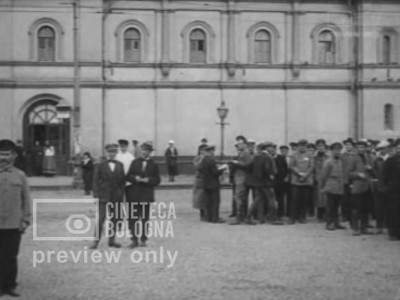
Ceremonial blessing of the flag (28th September 1914) of Czech legion in Kiev.
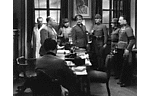
Wide shot of an office. Standing from left to right are: Dr. Šrámek (actor: František Smolík), an Austrian colonel (actor: Jaroslav Marvan), a military guard, Lieutenant Rjepkin (actor: Vladimír ...
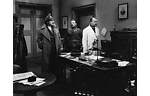
Wide shot of an officer. Lieutenant Rjepkin (actor: Vladimír Borský) is standing on the left. Dr. (actor: František Smolík) is standing behind a desk on the right with his back to Rjepkin. An Aust...
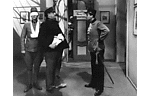
Wide shot of a corridor. Corporal Bartoněk (actor: Jiří Vondrovič) is standing on the right with an arm in a cast and bandaged eyes. Infantryman Tlamicha (actor: Theodor Pištěk) is standing next...
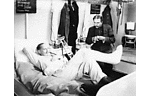
First Lieutenant Liška (actor: František Kreuzmann) is lying on a hospital bed with his leg in a cast and smoking. An Austrian officer is sitting to the right of him and peeling something. In the ba...
Robert Neulaender, Kino und Krieg, Bild & Film. Zeitschrift für Lichtbilderei und Kinematographie, IV, 12, (1914/1915), S. 256-257. Die Filmberichte über das "Neueste vom Kriegsschauplatz" seien eig...
E. Osten, Kinematographie des Krieges, Erste Internationale Filmzeitung, 9.Jg., Nr.21, (1915), S. 16-18. Bericht über den Einsatz aus dem Flugzeug aufgenommener Filme zur Aufklärung feindlicher Stel...
P.l., Kinematographische Kriegsberichterstattung, Erste Internationale Filmzeitung, 9.Jg.,Nr.22, (1915), S. 27. Die filmischen Kriegsneuheiten seien anfangs sehr begeistert aufgenommen worden, würden...
Kurbelmann im Kriegsdienst, Der Kinematograph, 436, (1915), S. 21-24. Aus der Wiener Arbeiter-Zeitung zitierter Bericht über die Erlebnisse eines Kriegsfilmers.
Kriegsabenteuer eines Kino-Operateurs, Der Kinematograph, 437, (1915), S. 14-15. Erlebnisbericht des Müncher Kameramanns Martin Kopp von seinen Erlebnissen als Kriegsberichterstatter.
B.T., Messters Kriegskinos, Der Kinematograph, 437, (1915), S. 19. Meldung, dass die Firma Messter die Erlaubnis bekommen habe, regelmäßig an der Westfront Filmaufnahmen zu machen.
Dr. Weiser, Der Ernemann-Kinox im Felde, Der Kinematograph, 438, (1915), S. 21. Bericht über die Eröffnung eines Feldkinos. Beigefügt ist ein Bild des Kinos mit seinen Besuchern. Der Verfasser kün...
National Film G.m.b.H. "Wir Barbaren", Der Kinematograph, 439, (1915), S. 20-22. Rezension einer Komödie, die die französische Propaganda gegen Deutschland aufgreift.