Film restored in collaboration with CNC - Service des Archives du Film.
Documentary on Luigi Pirandello, with many period images, taken from Pirandello’s piece: "Information on My Unintentional Stay on Earth ".
Immagini documentarie sul fronte della prima guerra mondiale: l'esercito italiano tra il Brenta e l'Adige; veduta del monte Pasubio e del Monte Cimone; si trasportano truppe e cannoni; in marcia...
The story of the Rosselli brothers through the testimony of Maria Agostini, Fausto Nitti, Emilio Lussu and Ferruccio Parri.
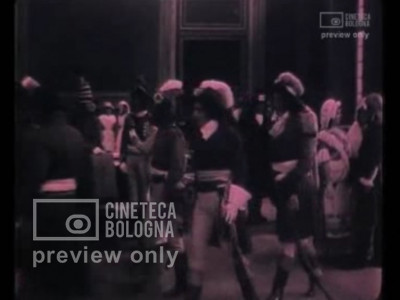
Guazzoni, in putting on this sensational work must have encountered many difficulties. However, he overcame them brilliantly. He presents the episodes and vicissitudes which characterise the liv...
A brief history of the Italian comic newspapers.
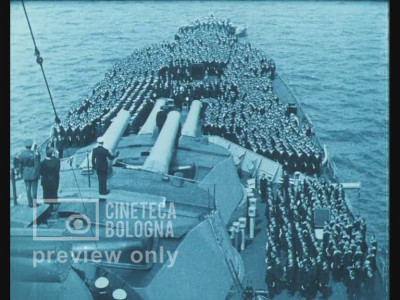
A British film recording the visit of King George V, accompanied by his son Prince Albert (later George VI), on a tour inspection of several British battleships in an unnamed location (possibly ...
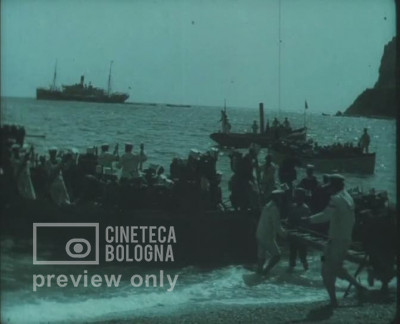
Queste manovre si sono svolte tra l'isola della Sardegna - più precisamente il Golfo di Aranci, dove il nemico aveva collocato la base delle sue operazioni - e Genova, che è stata bombardata. ...
Tomáš Garrigue Masaryk met the king of Italy Vittorio Emanuele III. di Savoia in Batavia.
General Štefánik on the visit of the Czechoslovak army in Jekaterinburg. Ceremonial handover of the flag.
General Štefánik on the visit of the Czechoslovak army in Jekaterinburg. On his right side general Jan Syrový.
General Štefánik on the visit of the Czechoslovak army in Jekaterinburg.
Regiments of Czechoslovak volunteers in Padova swear to the flegs with the participation of the Italian king Vittorio Emanuele III. di Savoia and Czech political representation.
Dr. Sylva Luxor, "Neue Angriffe des „Vorwärts“ gegen das Kino", Der Kinematograph, 406, (1914), S. 8-9. Entgegnungen auf die Vorwürfe der Sozialdemokraten, die Kriegslage zur eigenen Bereicherun...
Edgar Költsch, Die Vorteile durch den Krieg für das Kinotheater, Der Kinematograph, 407, (1914), S. 11-12. Auch wenn es nicht so aussehe, habe das Kino durch den Krieg einen Aufschwung erlebt. Insbe...
Aus der Praxis, Der Kinematograph, 407, (1914), S. 18-22. Das Filmen auf dem Kriegsschauplatz sei nur noch mit Genehmigung des Generaltstabs erlaubt. Kommentierung vom Kriegsaufnahmen in Kinos durch â...
Horst Emscher, Der Film im Dienste der Politik, Der Kinematograph, 410, (1914), S. 15-16. Der Autor hebt hervor, dass die Kriegsführung auf publizistischer Ebene, mit der die Meinung des Auslands bee...
Kriegsecho in der Kinomusik, Der Kinematograph, 411, (1914), S. 18-19. Bericht über die musikalische Untermalung von Kriegsaufnahmen durch die Kinoorchester, die oft als störend empfunden würden.
Neuheiten auf dem Berliner Filmmarkte, Der Kinematograph, 413, (1914), S. 18-20. "Deutsche Helden" wird als Film mit ergreifender Handlung und gut nachgestellten Kampfszenen bezeichnet, der seiner Wir...
Berthold Baer, Wie lange noch ?, Der Kinematograph, 415, (1914), S. 21-22 Klage über einseitig deutschenfeindliche Kriegsberichterstattung in amerikanischen Kinos. Forderung nach deutschen Aufnahmen,...
Neuheiten auf dem Berliner Filmmarkte, Der Kinematograph, 416, (1914), S. 19-20. Rezension der Kinoneuerscheinungen. Die Zahl der rezensierten Unterhaltungsfilme (in denen Soldaten zwar dargestellt we...