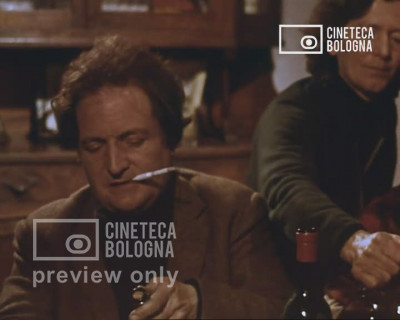
An evening at winter’s end: in Veneto, in the countryside of Treviso (in Zero Branco) the farmers have prepared bonfires for the feast of bread and wine, a propitiatory rite for a good year. T...
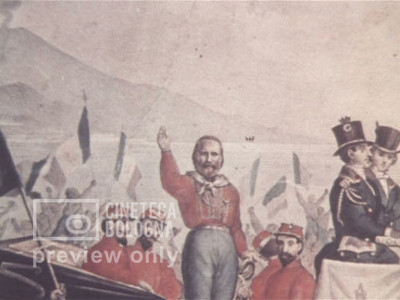
Costruito quasi interamente con illustrazioni d'epoca commentate dalla voce fuori campo, il film mette in luce i contrasti fra Garibaldi da un lato e Cavour con i Savoia dall'altro. Dopo i primi...
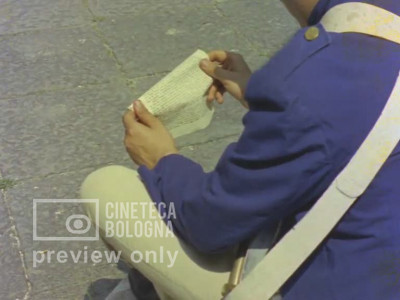
Near the bridges of Valle di Maddaloni (near Caserta), a teacher reads an excerpt from G.C. Abba’s “Noterelle di uno dei Mille” to a group of children. The excerpt is about the battle of t...
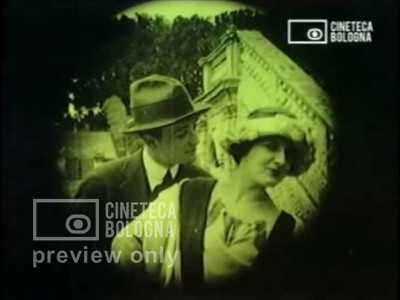
Un classico del "diva film" con la coppia romantica Francesca Bertini e Gustavo Serena, basato su un romanzo parzialmente autobiografico di Alexandre Dumas figlio pubblicato nel 1866. Questa sto...
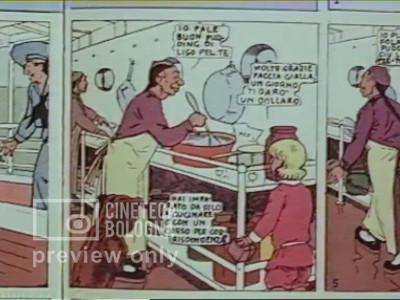
Half a century of history on the pages of the famous comic magazine “Il corriere dei piccoli”.
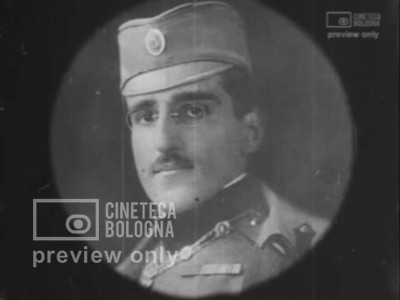
Parti frammentarie. Dopo i ritratti del principe ereditario Alessandro I di Jugoslavia (Alessandro Karađorđević) e del capo di stato maggiore dell'esercito serbo Petar Bojović, immagini dell...
Film restored in collaboration with Cinémathèque Suisse.
The film is constructed on a contemporary requirement tied to the wartime situation, seeing as Italy had gone to war with Austria in May 1915. At the end of the wedding ceremony the procession o...
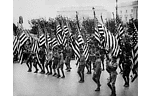
American soldiers sent to France march with the American flags in the streets of Paris.
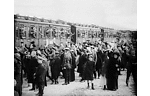
Mobilization in Germany. German soldiers wave from the windows of the train before leaving for the front.
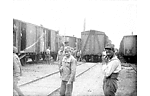
Czechoslovak volunteers on a small station in Siberia.
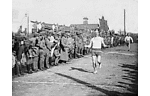
Czechoslovak volunteers relax - a run competition.
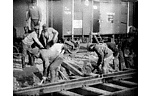
Technical troops maintained in good repair railway tracks - covering the underside of rails.
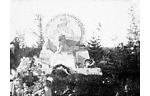
A monument with a stone lion - a symbol of Czech statehood- on the grave of fallen volunteers.
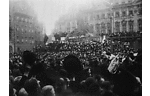
Welcome of the President T.G. Masaryk after his arrival in the country. On the monument of Jan Hus is a banner with the slogan "People of Jan Hus".
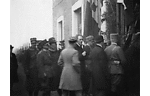
Tomáš Garrigue Masaryk met the king of Italy Vittorio Emanuele III. di Savoia in Batavia.
P., E.. „Französische und englische Films!.“ Der Kinematograph 400 (1914): 7-8. Der Verfasser behauptet, das Filmwesen sei von französischen Agenten beeinflusst. Jahrzehntelang hätten französi...
O. Verf.. „Der Kinematograph im Dienste des Heeres.“ Der Kinematograph 401 (1914): 3-4. Artikel über die Möglichkeiten, Filmtechnik militärisch nutzbar zu machen. Der Film sei nicht nur zu Zwec...
Martin Dentler GmbH. „Die richtigen Films zur richtigen Zeit.“ Der Kinematograph, 401 (1914): 11. Werbeanzeige, die mit der Bedeutung der beworbenen Filme angesichts des Krieges wirbt.
Eiko Film. „"Eiko-Woche“ ist die beste Kriegsberichterstattung" Der Kinematograph 404 (1914): 1.
Emscher, Horst: „Der Krieg und die deutsche Filmindustrie.“ Der Kinematograph 404 (1914): 5-6. Erörterung der wirtschaftlichen Lage der deutschen Filmindustrie. Entgegnet dem Vorwurf, dass die Be...
O. Verf.. „Das Programm in Kriegszeiten.“ Der Kinematograph 405 (1914): 8. Obwohl viele Kinos geschlossen hätten, würden die Besucherzahlen in den Kinos immer weiter zunehmen. Dies sei insbesond...
Eiko Film, Ich kenne keine Parteien mehr, Der Kinematograph, 406, (1914), S. 1. Werbeanzeige mit Hinweis auf "Beseitigung der Zensurschwierigkeiten".
Nordisk Films GmbH, Jede Woche neue Kriegs-Aufnahmen, Der Kinematograph 406, (1914), S. 3. "Jede Woche abwechselnd neue Kriegsaufnahmen vom Westen und Osten (eigene Expeditionen)".