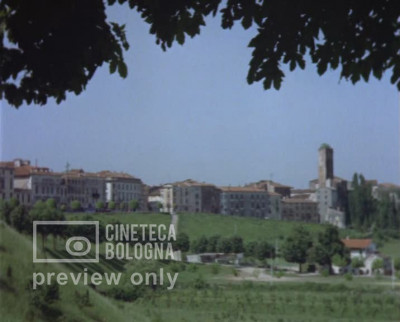
Bassano (province of Vicenza, Veneto) is a small city famous for its bridge, alpine soldiers, grappa and Monte Grappa. It is an architectural gem: towers, palaces, frescoes, streets with old-fas...
01 – Incontri Al Centro Sperimentale di Cinematografia di Roma si tiene un convegno dal titolo “Il lungo sonno del cortometraggio italiano” in cui vengono approfondite le problematiche leg...
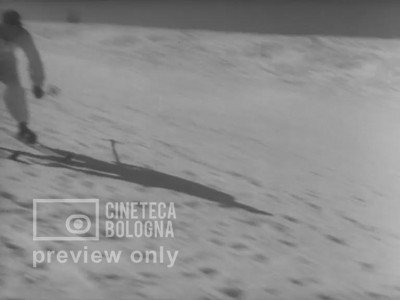
A documentary about the life of the Alpine troops during winter: competitions on the snow have a military character. There are downhill, cross-country and relay races in addition to the sled eve...
Film restored in collaboration with Fondazione Cineteca Italiana.
The life and work of the great actor Ettore Petrolini.
An investigation of Africans who have permanently settled in Italy: an Afro-Italian who participated as a lieutenant colonel in the first Italian invasion of Africa; an Ethiopian marshal who liv...
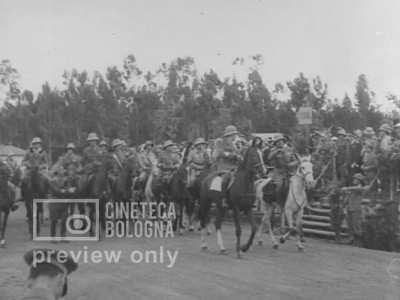
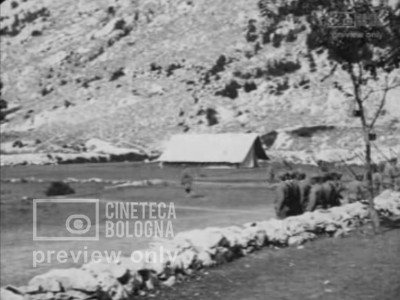
Panoramica su Cettigne, capitale del Regno del Montenegro, imbandierata per i festeggiamenti a Re Nicola I. Guardie armate, donne in costumi tipici. Al campo, tende, soldati in marcia con fucile...
This documentary is dedicated to Luigi Mercantini’s poetry and to the events of the Risorgimento related to it. Particular reference is made to “Spigolatrice di Sapri” and to “Inno di Ga...
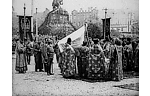
Ceremonial blessing of the flag (28th September 1914) of Czech legion in Kiev.
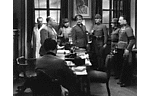
Wide shot of an office. Standing from left to right are: Dr. Šrámek (actor: František Smolík), an Austrian colonel (actor: Jaroslav Marvan), a military guard, Lieutenant Rjepkin (actor: Vladimír ...
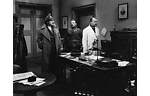
Wide shot of an officer. Lieutenant Rjepkin (actor: Vladimír Borský) is standing on the left. Dr. (actor: František Smolík) is standing behind a desk on the right with his back to Rjepkin. An Aust...
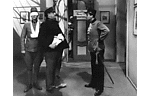
Wide shot of a corridor. Corporal Bartoněk (actor: Jiří Vondrovič) is standing on the right with an arm in a cast and bandaged eyes. Infantryman Tlamicha (actor: Theodor Pištěk) is standing next...
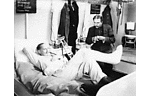
First Lieutenant Liška (actor: František Kreuzmann) is lying on a hospital bed with his leg in a cast and smoking. An Austrian officer is sitting to the right of him and peeling something. In the ba...
Die Verfilmung von Königlichen Lazarettbesuchen in der "Eiko-Woche", Der Kinematograph, 441, (1915), S. 10. Bericht über die Absicht de Eiko-Woche, nicht nur Kämpfe zu filmen, sondern auch das mili...
Gefahren bei der Aufnahme von Schlachtenfilms, Der Kinematograph, 443, (1915), S. 19. Die Annahme, dass viele Kriegsaufnahmen gestellt seien, sei unzutreffend. So sei einem Kameramann der Firma Messte...
Kriegsbilder-Revuen, Der Kinematograph, 419, (1915), S. 13. Die Aufnahmen, die das Volk vom Krieg zu sehen bekomme, seien oft nicht informativ genug, weil sie aus Zensurgründen gekürzt seien. Es sei...
Der Soldat und das Kino, Der Kinematograph, 420, (1915), S. 11-12. In vielen Kinos würden Soldaten auf Heimaturlaub einen Großteil des Publikums bilden. Viele Kinobesitzer würden glauben, dass dies...
Das erste Feldkino, Der Kinematograph, 421, (1915), S. 24. Bericht über die Eröffnung eines Feldkinos, der aus der Zeitung des 15. Armeekorps zitiert wird.
Englische Beobachtungen im Berliner Kino, Der Kinematograph, 421, (1915), S. 27. Bericht, der aus der Londoner "Daily Mail" zitiert wird und die Eindrücke eines englischen Reporters von einer Wochens...
Berthold Baer, Amerikana, Der Kinematograph, 422, (1915), S. 21-22. Die Stimmung in den USA sei durch Filme der Ententemächte sehr gegen Deutschland gestimmt. Die Deutschen seien sich nicht darüber ...
[Lustbarkeitssteuer für Kinos], Der Kinematograph, 424, (1915), S. 35. Bericht über Beratungen zur Lustbarkeitssteuerverordnung der Stadt Essen. Grund sei die hohe Zunahme der Zahl der Kinobesitzer ...