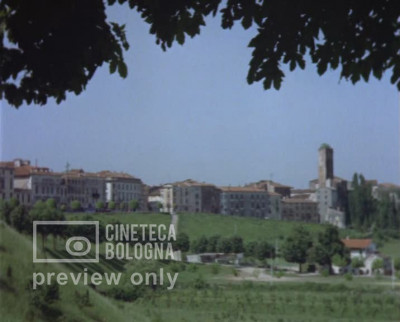
Bassano (province of Vicenza, Veneto) is a small city famous for its bridge, alpine soldiers, grappa and Monte Grappa. It is an architectural gem: towers, palaces, frescoes, streets with old-fas...
01 – Incontri Al Centro Sperimentale di Cinematografia di Roma si tiene un convegno dal titolo “Il lungo sonno del cortometraggio italiano” in cui vengono approfondite le problematiche leg...
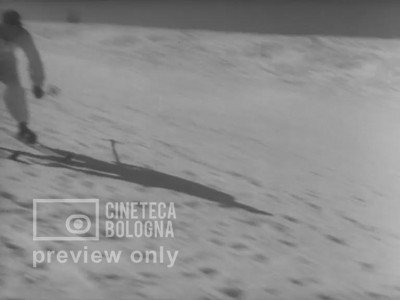
A documentary about the life of the Alpine troops during winter: competitions on the snow have a military character. There are downhill, cross-country and relay races in addition to the sled eve...
Film restored in collaboration with Fondazione Cineteca Italiana.
The life and work of the great actor Ettore Petrolini.
An investigation of Africans who have permanently settled in Italy: an Afro-Italian who participated as a lieutenant colonel in the first Italian invasion of Africa; an Ethiopian marshal who liv...
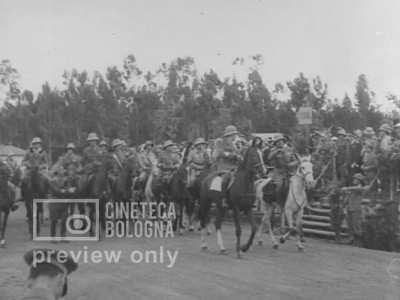
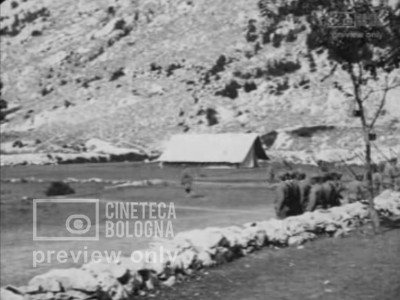
Panoramica su Cettigne, capitale del Regno del Montenegro, imbandierata per i festeggiamenti a Re Nicola I. Guardie armate, donne in costumi tipici. Al campo, tende, soldati in marcia con fucile...
This documentary is dedicated to Luigi Mercantini’s poetry and to the events of the Risorgimento related to it. Particular reference is made to “Spigolatrice di Sapri” and to “Inno di Ga...
Wounded soldiers eat in a hospital room.
A military doctor shows a wounded soldier to a Red Cross delegation.
Requisition of horses.
Conscripts in the assembly camp.
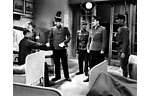
Wide shot of a hospital room. A standing First Lieutenant Schranel (actor: Vladimír Pospíšil-Born) shakes hands with First Lieutenant Liška (actor: František Kreuzmann), who is sitting on a bed w...
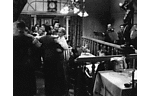
View of a dance café. Several couples are dancing on the left, including First Lieutenant Schranel (actor: Vladimír Pospíšil-Born) and Nurse Mathilde (actress: Adina Mandlová). To the right of th...
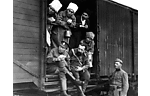
Exterior view of a train. Six Russian soldiers (prisoners of war) with Asian features are sitting or standing in the train's open door. Some of the soldiers are holding bread in their hands and all ar...
Dr. Sylva Luxor, "Neue Angriffe des „Vorwärts“ gegen das Kino", Der Kinematograph, 406, (1914), S. 8-9. Entgegnungen auf die Vorwürfe der Sozialdemokraten, die Kriegslage zur eigenen Bereicherun...
Edgar Költsch, Die Vorteile durch den Krieg für das Kinotheater, Der Kinematograph, 407, (1914), S. 11-12. Auch wenn es nicht so aussehe, habe das Kino durch den Krieg einen Aufschwung erlebt. Insbe...
Aus der Praxis, Der Kinematograph, 407, (1914), S. 18-22. Das Filmen auf dem Kriegsschauplatz sei nur noch mit Genehmigung des Generaltstabs erlaubt. Kommentierung vom Kriegsaufnahmen in Kinos durch ...
Horst Emscher, Der Film im Dienste der Politik, Der Kinematograph, 410, (1914), S. 15-16. Der Autor hebt hervor, dass die Kriegsführung auf publizistischer Ebene, mit der die Meinung des Auslands bee...
Kriegsecho in der Kinomusik, Der Kinematograph, 411, (1914), S. 18-19. Bericht über die musikalische Untermalung von Kriegsaufnahmen durch die Kinoorchester, die oft als störend empfunden würden.
Neuheiten auf dem Berliner Filmmarkte, Der Kinematograph, 413, (1914), S. 18-20. "Deutsche Helden" wird als Film mit ergreifender Handlung und gut nachgestellten Kampfszenen bezeichnet, der seiner Wir...
Berthold Baer, Wie lange noch ?, Der Kinematograph, 415, (1914), S. 21-22 Klage über einseitig deutschenfeindliche Kriegsberichterstattung in amerikanischen Kinos. Forderung nach deutschen Aufnahmen,...
Neuheiten auf dem Berliner Filmmarkte, Der Kinematograph, 416, (1914), S. 19-20. Rezension der Kinoneuerscheinungen. Die Zahl der rezensierten Unterhaltungsfilme (in denen Soldaten zwar dargestellt we...