Film restored in collaboration with Nederlands Filmmuseum.
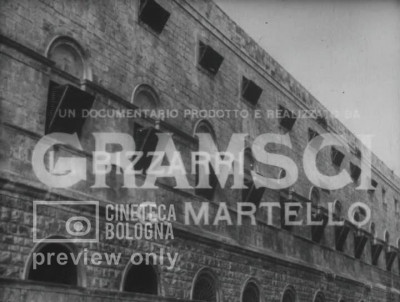
A partire dalle "Lettere dal carcere", il documentario traccia una ricostruzione della figura di Antonio Gramsci. Si inizia in un'aula universitaria, dove un professore dà avvio a una lezione s...
The life of the philosopher Antonio Rosmini in the historical, political and cultural dimensions of the Risorgimento.
01 – Nel mondo (Mosca, 4/06/1970) Panorama della città di Mosca vista dal fiume Moskova. Alcuni cittadini sovietici ascoltano le notizie dall'autoradio o leggono quotidiani dove è riportata ...
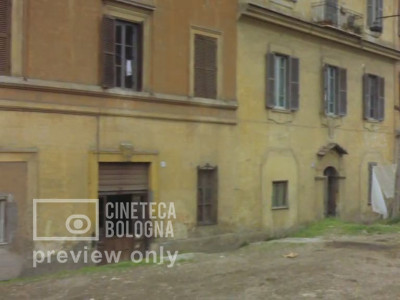
Just outside the old city walls of Rome, we find a mass of washed-out houses and bumpy streets arranged in a geometrical pattern that makes them anonymous and depersonalized. The documentary fil...
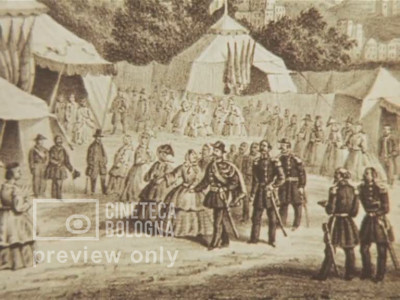
The historical events connected to Garibaldi and the Expedition of the Thousand.
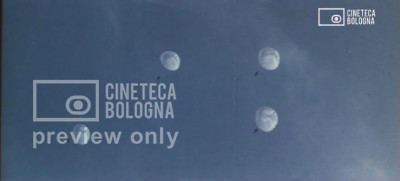
Alpine paratrooper training.
At the end of the Second World War politicians including Alcide De Gasperi, Jean Monnet, Paul Henri Spaak, Robert Schumann, Konrad Adenauer fought a tough battle for European unity. The end of c...
Ceremonial blessing of the flag (28th September 1914) of Czech legion in Kiev.
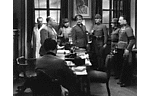
Wide shot of an office. Standing from left to right are: Dr. Šrámek (actor: František Smolík), an Austrian colonel (actor: Jaroslav Marvan), a military guard, Lieutenant Rjepkin (actor: Vladimír ...
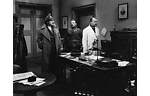
Wide shot of an officer. Lieutenant Rjepkin (actor: Vladimír Borský) is standing on the left. Dr. (actor: František Smolík) is standing behind a desk on the right with his back to Rjepkin. An Aust...
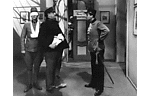
Wide shot of a corridor. Corporal Bartoněk (actor: Jiří Vondrovič) is standing on the right with an arm in a cast and bandaged eyes. Infantryman Tlamicha (actor: Theodor Pištěk) is standing next...
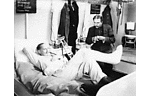
First Lieutenant Liška (actor: František Kreuzmann) is lying on a hospital bed with his leg in a cast and smoking. An Austrian officer is sitting to the right of him and peeling something. In the ba...
Oscar Geller, Detektiv-Filme, Der Kinematograph, 593, (1918), S. 21-25. Eröterung der Krimiwelle. Man könne Krimis nicht einfach als Schund abtun. Auch wenn viele der frühen Krimis, maßgeblich aus...
Poldi Schmidl, Der Kinobesitzer als Staatsbeamter, Der Kinematograph, 607, (1918). Angesichts der geplanten Konzessionspflicht für Kinobesitzer wird die Möglichkeit einer Verstaatlichung der Filmind...
Argus, Neuheiten auf dem Berliner Filmmarkte, Der Kinematograph, 614, (1918). "Kinder der Liebe" als Tendenz- und Aufklärungsfilm bezeichnet, dessen Absicht überzeuge. "Der Gefangene von Dahomey" se...
Egon Jacobsohn, Ferdinand Lassalle, Der Kinematograph, 615, (1918), S. 18-30. Bericht von der Uraufführung in Berlin. Die Aufführung sei ein voller Erfolg gewesen, zumal es besonders gut in die Zeit...
Deutsche Lichtbild Gesellschaft e.V., Der Friedensreiter, Der Kinematograph, 618, (1918), S.22-23.
Emil Perlmann, Wenn die Waffen ruhen...!, Der Kinematograph, 619, (1918). Erörterung der Lage der Filmindustrie angesichts des greifbaren Kriegsendes. Die Filmindustrie müsse den Kampf gegen die Zen...
Der deutsche Film für das Ausland, Der Kinematograph, 620, (1918). Es sei Aufgabe der deutschen Filmindustrie, den negativen Vorstellungen über Deutschland, die im Ausland im Krieg verbreitet worden...
Universum Filmverleih, Die Waffen nieder, Der Kinematograph, 620, (1918), S. 28-33.