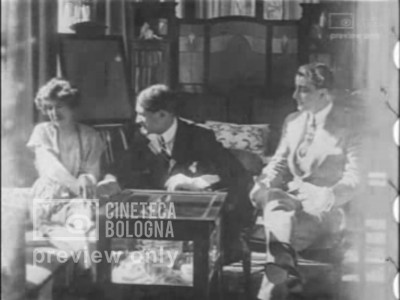
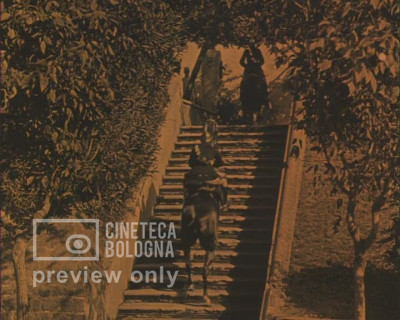
Frammenti della versione cinematografica del celebre feuilleton di Carolina Invernizio.
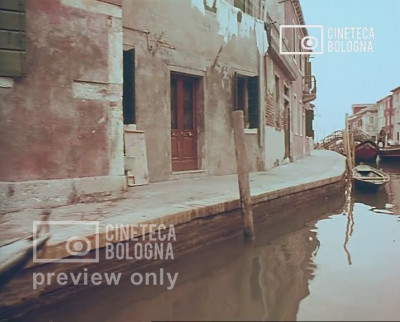
A short film about the painter Gino Rossi: his life, art, struggle against the academies, conformity and middle class duplicity. His dissent is unyielding, his life complete freedom, but he ends...
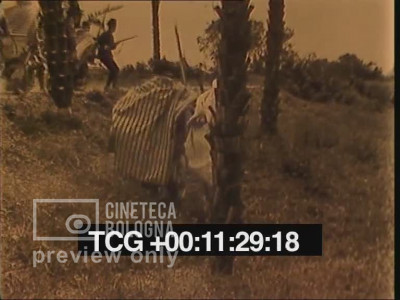
A patriotic film tinged with humor and sentimentalism. Stock footage (the crowded town, the departure of warships) and reconstructed war scenes in the desert are part of the second half about th...
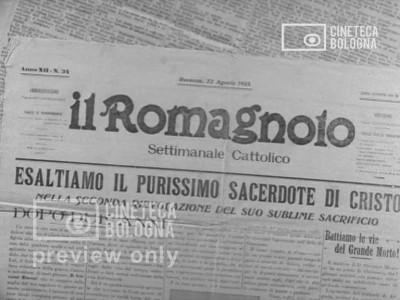
The life of the parish priest don Giovanni Minzoni is reconstructed from adolescence to adulthood, from pastoral mission to extreme sacrifice. The film visits the places of his youth in his home...
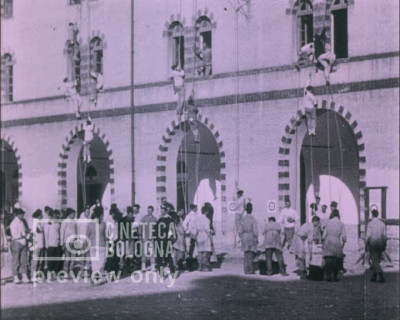
Documentary footage of the exercises of the bersaglieri corps.
01 – Visita (Roma, 26/10/1967) Nella basilica di San Pietro, in Vaticano, Papa Paolo VI ed il Patriarca di Costantinopoli Atenagora partecipano a una cerimonia religiosa per avvicinare la chie...
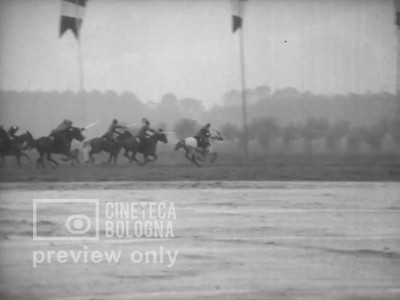
An exciting series of pictures of daring horsemanship. The film is full of thrilling episodes, and is asubject that should prove highly popular. "The Bioscope", 8th September 2010.
01 – Nel mondo (Praga - Karlovy Vary - Bucarest - Parigi - Bonn, 8-18/05/1968) Su una cartina geografica dell'Europa viene mostrata in dettaglio la Cecoslovacchia e la sua capitale, Praga. Imm...
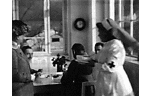
Wounded soldiers eat in a hospital room.
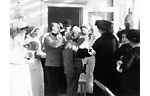
A military doctor shows a wounded soldier to a Red Cross delegation.
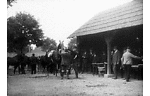
Requisition of horses.
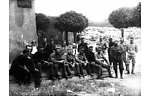
Conscripts in the assembly camp.
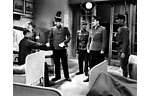
Wide shot of a hospital room. A standing First Lieutenant Schranel (actor: Vladimír Pospíšil-Born) shakes hands with First Lieutenant Liška (actor: František Kreuzmann), who is sitting on a bed w...
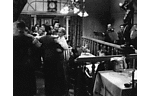
View of a dance café. Several couples are dancing on the left, including First Lieutenant Schranel (actor: Vladimír Pospíšil-Born) and Nurse Mathilde (actress: Adina Mandlová). To the right of th...
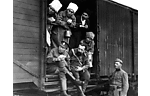
Exterior view of a train. Six Russian soldiers (prisoners of war) with Asian features are sitting or standing in the train's open door. Some of the soldiers are holding bread in their hands and all ar...
P., E.. „Französische und englische Films!.“ Der Kinematograph 400 (1914): 7-8. Der Verfasser behauptet, das Filmwesen sei von französischen Agenten beeinflusst. Jahrzehntelang hätten französi...
O. Verf.. „Der Kinematograph im Dienste des Heeres.“ Der Kinematograph 401 (1914): 3-4. Artikel über die Möglichkeiten, Filmtechnik militärisch nutzbar zu machen. Der Film sei nicht nur zu Zwec...
Martin Dentler GmbH. „Die richtigen Films zur richtigen Zeit.“ Der Kinematograph, 401 (1914): 11. Werbeanzeige, die mit der Bedeutung der beworbenen Filme angesichts des Krieges wirbt.
Eiko Film. „"Eiko-Woche“ ist die beste Kriegsberichterstattung" Der Kinematograph 404 (1914): 1.
Emscher, Horst: „Der Krieg und die deutsche Filmindustrie.“ Der Kinematograph 404 (1914): 5-6. Erörterung der wirtschaftlichen Lage der deutschen Filmindustrie. Entgegnet dem Vorwurf, dass die Be...
O. Verf.. „Das Programm in Kriegszeiten.“ Der Kinematograph 405 (1914): 8. Obwohl viele Kinos geschlossen hätten, würden die Besucherzahlen in den Kinos immer weiter zunehmen. Dies sei insbesond...
Eiko Film, Ich kenne keine Parteien mehr, Der Kinematograph, 406, (1914), S. 1. Werbeanzeige mit Hinweis auf "Beseitigung der Zensurschwierigkeiten".
Nordisk Films GmbH, Jede Woche neue Kriegs-Aufnahmen, Der Kinematograph 406, (1914), S. 3. "Jede Woche abwechselnd neue Kriegsaufnahmen vom Westen und Osten (eigene Expeditionen)".