The 'big battle' structure of the film opens with the preparatory bombardment for the days before the attack, the Infantry marching to their final positions, the attack itself, the casualties, prisone...
The King and Queen arrive in Calais to start the visit. The King inspects war trophies at Bailleul with General Sir Herbert Plumer, then goes on to watch a tank demonstration and talk with a group of ...
A column of men from 1st Balloon Company, in the Meuse or Moselle region, march through a village. British "8-inch Naval rifles" (in fact 6-inch Mk VII guns) being fired by gunners of 27th (New York) ...
I. A posed group of crews and mechanics of 94th 'Hat in the Ring' Pursuit Squadron at 1st Pursuit Group airfield, Rembercourt, 18th October. Left to right 1st Lieutenant Edward V Rickenbacker, Major K...
(Reel 1) Text of Admiral Beatty's message to the Empire. Beatty's flag (Vice-Admiral's) is broken out, and the Grand Fleet puts to sea: US battleships of 6th Battle Squadron in line astern; medium sho...
I. Aerial medium shot of HMS Satyr (F.59) underway. Two surrendered U-boats pass beneath camera-airship, followed by Scott Class Leader, UC.III and U.160 Class (?) submarines. Medium shot, HMS Melampu...
(Reel 1) The film stresses that it shows normal RAF life and has not deliberately selected its scenes. It begins with a training camp for pilots in France. New pilots arrive and are brought from the s...
The squadron's tour takes in the principal ports of the Empire. At each port the ships of the squadron are thrown open to the locals. Vice-Admiral Sir Frederick L Field has his flag on board HMS Hood....
Rochus Gliese, Paul Wegener (from left to right)
Still with Lyda Salmonova, Paul Wegener (on the right, front)
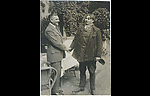
Arthur Ehrens, Paul Wegener (from left to right)
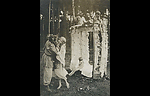
Paul Wegener, Hedwig Gutzeit
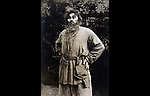
Paul Wegener
Paul Wegener, Lyda Salmonova
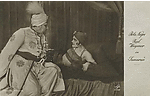
Paul Wegener, Pola Negri
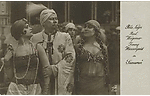
Pola Negri, Paul Wegener, Jenny Hasselquist (from left to right)
P., E.. „Französische und englische Films!.“ Der Kinematograph 400 (1914): 7-8. Der Verfasser behauptet, das Filmwesen sei von französischen Agenten beeinflusst. Jahrzehntelang hätten französi...
O. Verf.. „Der Kinematograph im Dienste des Heeres.“ Der Kinematograph 401 (1914): 3-4. Artikel über die Möglichkeiten, Filmtechnik militärisch nutzbar zu machen. Der Film sei nicht nur zu Zwec...
Martin Dentler GmbH. „Die richtigen Films zur richtigen Zeit.“ Der Kinematograph, 401 (1914): 11. Werbeanzeige, die mit der Bedeutung der beworbenen Filme angesichts des Krieges wirbt.
Eiko Film. „"Eiko-Woche“ ist die beste Kriegsberichterstattung" Der Kinematograph 404 (1914): 1.
Emscher, Horst: „Der Krieg und die deutsche Filmindustrie.“ Der Kinematograph 404 (1914): 5-6. Erörterung der wirtschaftlichen Lage der deutschen Filmindustrie. Entgegnet dem Vorwurf, dass die Be...
O. Verf.. „Das Programm in Kriegszeiten.“ Der Kinematograph 405 (1914): 8. Obwohl viele Kinos geschlossen hätten, würden die Besucherzahlen in den Kinos immer weiter zunehmen. Dies sei insbesond...
Eiko Film, Ich kenne keine Parteien mehr, Der Kinematograph, 406, (1914), S. 1. Werbeanzeige mit Hinweis auf "Beseitigung der Zensurschwierigkeiten".
Nordisk Films GmbH, Jede Woche neue Kriegs-Aufnahmen, Der Kinematograph 406, (1914), S. 3. "Jede Woche abwechselnd neue Kriegsaufnahmen vom Westen und Osten (eigene Expeditionen)".