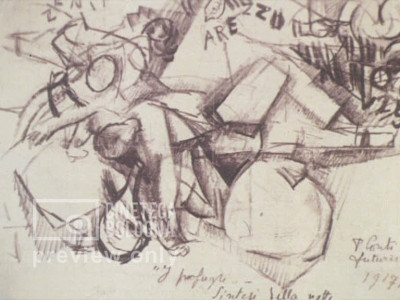
Il pittore Primo Conti (1900 - 1988) legge un libro nella sua casa di Fiesole, vengono poi ricordati i suoi esordi negli anni Dieci quando, giovanissimo, inizia a dipingere influenzato dai fauve...
Film restored in collaboration with Cinémathèque Française.
Il film, alternando alle riprese molte fotografie e filmati di repertorio, ripercorre la vita e la carriera del compositore ungherese Béla Bartók (1881-1945). Nato a Nagyszentmiklós (San Nicc...
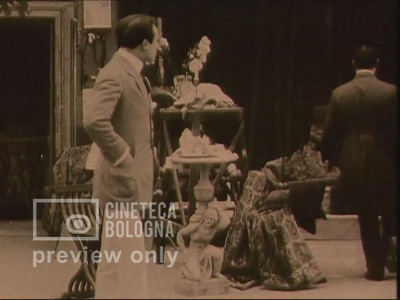
In un piccolo paese dell'Umbria vive il conte di San Secondo con sua figlia Elena, la quale ama in segreto il pittore Paolo Ardenti, un giovane di modeste origini. Rovinato da un'errata speculaz...
Si ripercorrono gli anni che crearono i presupposti per l'unità d'Italia, servendosi prevalentemente di materiale iconografico d’epoca. La battaglia di Novara e la fine della prima guerra d...
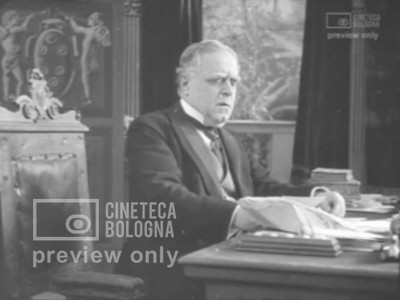
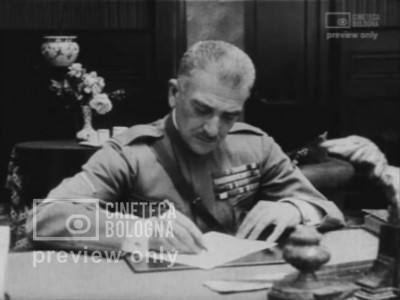
Il Generale Armando Diaz scrive un documento alla scrivania. Restaurato a partire da un frammento negativo d’epoca appartenente al fondo Fausto Correra.
Film restored in collaboration with Cinémathèque Suisse.
Spari di artiglieria di navi da guerra battenti bandiera italiana. Restaurato a partire da un frammento positivo d’epoca appartenente al fondo Fausto Correra.
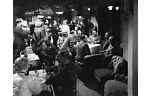
Wide shot of a café filled with Austrian officers. Some are sitting at tables and others are standing in the background, most of them hold glasses in their hands. Nurse Mathilde (actress: Adina Mandl...
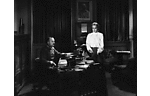
Wide shot of an office. Dr. Šrámek (actor: František Smolík) in the uniform of an Austrian officer sits at a desk and gazes at the nurse Mathilde (actress: Adina Mandlová), who is standing on the...
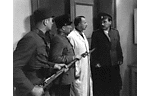
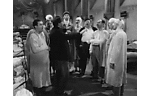
Medium shot of an Austrian soldier standing with an Austrian colonel (Jaroslav Marvan), Dr. Šrámek (František Smolík), and Lieutenant Rjepkin (Vladimír Borský). The soldier is pointing his bayon...
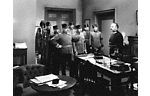
Wide shots of an office. A group of seven Austrian officers (fifth from left is actor Jaroslav Marvan) stand at the door and look at Dr. Šrámek (actor: František Smolík), who is standing behind a ...
Wide shot of a hospital room with a group of standing patients and three military privates. One of the privates, infantryman Tlamicha (actor: Theodor Pištěk), stands in the middle and conducts as th...
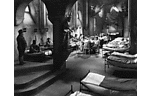
Wide shot of a church interior that has been converted into a military hospital. Wounded soldiers sit or lie on hospital beds lined up along the walls. Other patients sit at the two tables standing in...
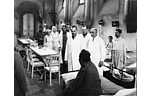
Wide shot of a hospital room where doctors are making rounds. On the left are tables with bread and carafes of water. Chairs are standing around the tables. Five doctors stand in the middle of the roo...
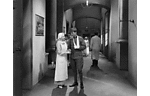
Wide shot of a hospital corridor. Nurse Tonička (actress: Truda Grosslichtová) stands in the middle of the corridor clasping hands with Corporal Bartoněk (actor: Jiří Vondrovič), whose other arm...
Neuheiten auf dem Berliner Filmmarkte, Der Kinematograph, 418, (1914), S. 27-35.
Presse-Stimmen über das Filmwerk Tirol in Waffen, Das Lichtbildtheater, 6.Jg., Nr.10, (1914).
Urteil über "Tirol in Waffen", Das Lichtbildtheater, 6.Jg, Nr.10, (1914). Rezension, die den pädagogischen Wert des Filmes unterstreicht. Jeder Deutsche solle diesen Film gesehen haben. Unterzeichne...
Traugott Schalcher, Die neue Generation, Das Lichtbildtheater, 6.Jg, Nr.22, (1914). Der Artikel berichtet von der Selbstverständlichkeit, mit der das Kino als Medium in der jungen Generation angenomm...
Traugott Schalcher, Patriotische Films und Filmpatrioten, Das Lichtbildtheater, 6.Jg, Nr.30, (1914). Bericht darüber, dass in Frankreich patriotische Filme einen Aufschwung erleben würden, während ...
O.Th. Stein, Kinematographische Kriegsberichterstattung, Film und Lichtbild, 3, (1914), S. 42-44. Der Film wird als sensationell bewertet, der Produzentenfirma Expreß-Films wird angeraten, diesen Weg...
O.Th. Stein, Ausländerei im Film, Film und Lichtbild, 4, (1914), S. 50-52. Der Artikel beklagt die herausragende Stellung französischer Firmen, auch bei der Erstellung von Aufnahmen, die deutsche Na...
Hermann Häfker, Kinematographie und Krieg, Bild & Film. Zeitschrift für Lichtbilderei und Kinematographie, IV,1, (1914/1915), S. 1-3. Der Krieg sei der Sache der Kinoreform förderlich, weil die aus...