A trip to Trieste and its surroundings following the tracks of three great writers: Scipio Slataper, Italo Svevo and Umberto Saba.
L'arte e la vita del pittore Pietro Morando. Morando, ottantenne, cammina leggendo il giornale, arriva al suo studio situato nel centro della vecchia Alessandria. Nel cortile saluta un vicino, s...
From 1891 to 1945, a popular form of iconography thrived next to the official one documenting Italy’s political and social life. This alternative iconography can be found in humorous and satir...
Il documentario ripercorre le tappe della produzione artistica del pittore Carlo Carrà illustrando alcune delle sue opere più note. Nato a Quargnento (Alessandria) nel 1881, Carrà nelle prime...
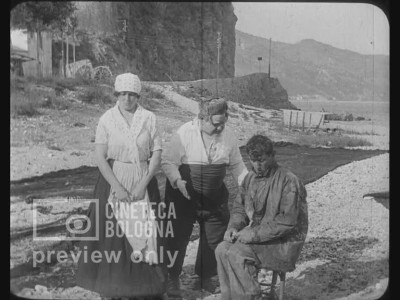
Robinet corteggia una fanciulla che sta tirando le reti a riva. Il padre della fanciulla pretende però che la figlia si metta con un pescatore, quindi Robinet si traveste e intraprende la profe...
"Difficoltà d'ogni genere si opponevano alla riproduzione cinematografica della vita degli animali marini, dovute anche alla piccolezza di questi esseri, altre alla loro straordinaria trasparen...
01 – Numero speciale. Le nostre inchieste ( Milano, 14-16/04/1969) Inaugurazione della 47° edizione della Fiera di Milano. Il presidente Saragat, con la scorta in motocicletta, giunge su una ...
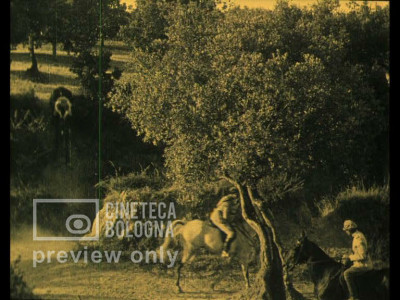
Film documenting a tortuous series of cavalry exercises. It includes a harrowing sequence of horses descending steep hills and cliffs and jumping into the water. Film restored in collaboration w...
Paul Wegener, Lyda Salmonova
Lyda Salmonova
Lyda Salmonova
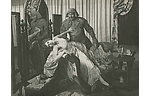
Lyda Salmonova, Paul Wegener
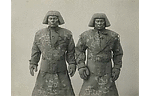
Golem-figures by sculptor Rudolf Belling
Paul Wegener
Still with Paul Wegener (in the middle)
Still with Henrik Galeen (first on the left), Paul Wegener (first from the right)
Neuheiten auf dem Berliner Filmmarkte, Der Kinematograph, 418, (1914), S. 27-35.
Presse-Stimmen über das Filmwerk Tirol in Waffen, Das Lichtbildtheater, 6.Jg., Nr.10, (1914).
Urteil über "Tirol in Waffen", Das Lichtbildtheater, 6.Jg, Nr.10, (1914). Rezension, die den pädagogischen Wert des Filmes unterstreicht. Jeder Deutsche solle diesen Film gesehen haben. Unterzeichne...
Traugott Schalcher, Die neue Generation, Das Lichtbildtheater, 6.Jg, Nr.22, (1914). Der Artikel berichtet von der Selbstverständlichkeit, mit der das Kino als Medium in der jungen Generation angenomm...
Traugott Schalcher, Patriotische Films und Filmpatrioten, Das Lichtbildtheater, 6.Jg, Nr.30, (1914). Bericht darüber, dass in Frankreich patriotische Filme einen Aufschwung erleben würden, während ...
O.Th. Stein, Kinematographische Kriegsberichterstattung, Film und Lichtbild, 3, (1914), S. 42-44. Der Film wird als sensationell bewertet, der Produzentenfirma Expreß-Films wird angeraten, diesen Weg...
O.Th. Stein, Ausländerei im Film, Film und Lichtbild, 4, (1914), S. 50-52. Der Artikel beklagt die herausragende Stellung französischer Firmen, auch bei der Erstellung von Aufnahmen, die deutsche Na...
Hermann Häfker, Kinematographie und Krieg, Bild & Film. Zeitschrift für Lichtbilderei und Kinematographie, IV,1, (1914/1915), S. 1-3. Der Krieg sei der Sache der Kinoreform förderlich, weil die aus...